

Buyer Resources
One more thing worth knowing: home warranties work on wholesale dollar values. Replacement costs are calculated on like-for-like capacity and features, not necessarily brand name. Don't expect the warranty company to replace your appliance with the exact same brand if the system qualifies for replacement.
What You Need to Know About Home Warranty
A home warranty can be a smart safety net or an expensive misunderstanding. Here's how to tell the difference before you sign anything.
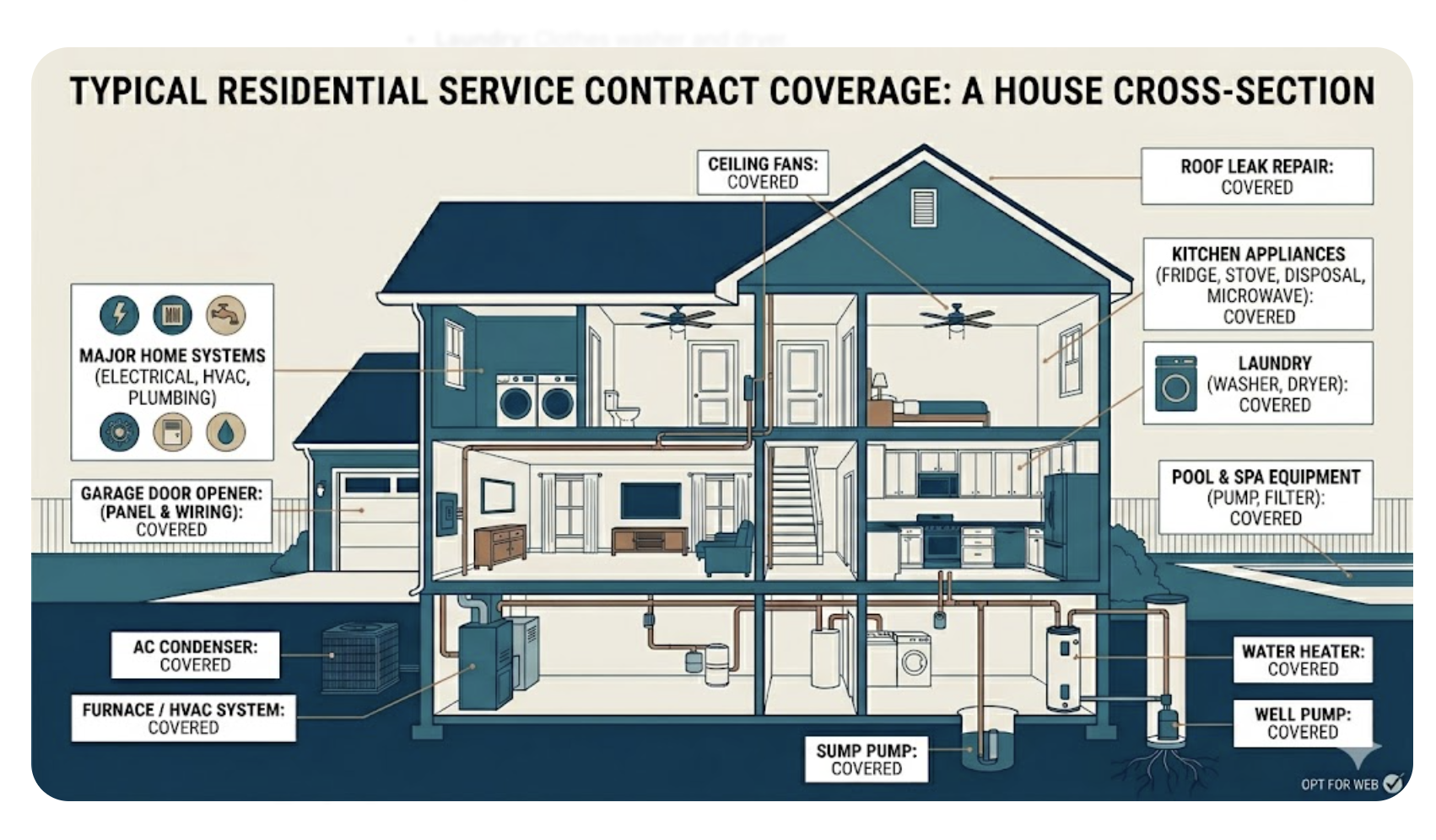
One of the most common questions I hear from buyers and sellers alike is some version of: "Should I get a home warranty?" The short answer is: it depends. The longer answer is what this post is for. A home warranty is a service contract, not insurance. It's designed to help offset repair and replacement costs when a home's mechanical systems or appliances break down due to normal wear and tear during the coverage period. But there are important boundaries, and understanding them before you buy a policy could save you a real headache down the road.What a Home Warranty Actually Covers
Most home warranty plans cover mechanical systems and built-in appliances that stop working under normal use. Commonly covered items include:- Heating and air conditioning systems
- Electrical system
- Plumbing
- Water heater
- Built-in appliances: dishwasher, oven/range, built-in microwave, garbage disposal
- Refrigerator with built-in icemaker
- Clothes washer and dryer
- Garage door opener
- Ceiling fans, sump pump, central vacuum
Important: Items must be in proper working order when coverage begins. Home warranties do not cover known pre-existing issues. No exceptions.
What a Home Warranty Does Not Cover
This is where buyers sometimes get surprised. Under TREC and TDI guidelines, a home warranty cannot cover secondary damages resulting from an appliance failure. It is also not a form of homeowner's insurance -- those are two very different products that serve two different purposes. Other exclusions to watch for:- Routine maintenance and required servicing (that's the homeowner's responsibility)
- Pre-existing conditions, whether known or visible at the time of coverage
- Some providers exclude certain items for an initial waiting period after the policy starts
The HVAC Rule: Get a Real Inspection
HVAC is the largest, most-used, and most expensive system in a home. Warranty associations nationwide consistently urge buyers to hire a licensed HVAC technician for a thorough inspection -- not just a "service call" -- before closing. Here's why this matters: TREC inspectors have a limited scope of inspection. They cannot detect many pre-existing HVAC issues. Things like pre-existing coil leaks or cracks in the heat exchanger are not covered by warranty and often aren't visible to a general inspector. A licensed HVAC tech can find these issues where a standard inspection cannot. Warranty companies are far more willing to cover an HVAC claim when the homeowner documented due diligence upfront. An inspection report showing the system was in good working order at closing -- with no red flags -- establishes a paper trail that supports your claim if something fails later. This is what the industry calls proving "Unknown Pre-Existing Conditions."
Bottom line: If you're buying a home with an older HVAC system, budget for a dedicated HVAC inspection by a licensed technician before closing. It is money well spent.
How to Spend Your Warranty Dollars Wisely
Before choosing a plan, look honestly at the age and condition of the home's systems and appliances. If the HVAC is 15 years old or the water heater is past its expected life, a higher coverage tier makes sense -- those plans pay more toward replacing major systems, covering equipment, labor, and secondary services required for a full replacement. When comparing providers, these are the factors that carry the most weight:Primary Factors
- Term length (12 vs. 13 months) and price range ($550-$750)
- Local sales representative availability
- Contractor/vendor quality
- BBB rating and claim payment history
- Realtor references and market reputation
Secondary Factors
- Trade call fee (the amount you pay per service visit)
- Avoiding plans that use marketing perks -- A/C tune-ups, sprinkler systems, rekey services -- that you could easily get from local vendors for the same price or less than the trade call fee
An Added Benefit Worth Mentioning
Beyond repairs, home warranty companies offer industry wholesale pricing on appliance purchases and upgrades. If you're in a home where the appliances are aging but still functional, your warranty membership can be a cost-effective way to replace them when you're ready. It's a quiet benefit that a lot of homeowners don't take advantage of.Questions to Ask Before You Buy
- What is the trade call fee, and does it apply per visit or per system?
- Is there a waiting period before coverage kicks in for any systems?
- What are the dollar caps on HVAC or major system replacement?
- Does the policy cover both repair and full replacement?
- Who are the approved contractors in my area, and can I request a specific vendor?
- What documentation do I need to keep on file for future claims?
A Note for Sellers
Offering a home warranty as part of a listing is a common and well-received seller concession. It gives buyers confidence in the purchase and can reduce post-closing friction if something breaks shortly after move-in. If you're listing a home with older systems, it's worth a conversation about whether a seller's home warranty makes sense for your transaction. It won't cover everything. But when something does go wrong in that first year -- and statistically, something usually does -- your buyer will be glad it was there.
Have questions about home warranties, what to ask for in a contract, or how to evaluate coverage for a specific home? Let's talk. I've been navigating these conversations for over 25 years and I'm happy to walk you through it.
Amy Beyer, Realtor Grapevine, TX | AmyBeyerRealtor.com
Powered by Real Broker, LLC | TREC #0500623
Check out this article next