
Buyer & Seller Resource
Understanding Closing Costs in Texas: What Buyers and Sellers Actually Pay
Closing costs catch a lot of people off guard, not because they're a secret, but because the number rarely gets discussed in real detail until late in the process. Both buyers and sellers have their own set of costs at closing, and knowing what to expect ahead of time makes budgeting far less stressful than being surprised by a final settlement statement.
I have walked buyers and sellers through closing costs across Grapevine for more than two decades, and the questions I get are almost always the same: what exactly am I paying for, and why is the number what it is. This guide breaks down the categories on both sides.
Part of the confusion comes from how differently these costs get discussed depending on who you ask. A lender focuses on the buyer's side, a title company focuses on the closing process itself, and an agent typically sees the full picture from both sides of the transaction. This guide pulls all of that together in one place.
Key Takeaways
- Buyer closing costs typically include lender fees, title insurance, appraisal, and prepaid items like property taxes and insurance.
- Seller closing costs typically include title-related fees, prorated property taxes, and any negotiated buyer concessions.
- Closing costs are separate from your down payment, and both should be budgeted for independently.
- Some closing costs are negotiable between buyer and seller, depending on market conditions and contract terms.
- Getting an estimate early in the process, not right before closing, helps you budget accurately.
"Closing costs shouldn't be a surprise on closing day. If you understand the categories early, the final number is just confirmation, not a shock."
Amy Beyer, REALTOR®, Century 21 Mike Bowman, Grapevine's Go-To Expert for Listing Services, Relocation and New Construction Homes
What Closing Costs Do Buyers Typically Pay?
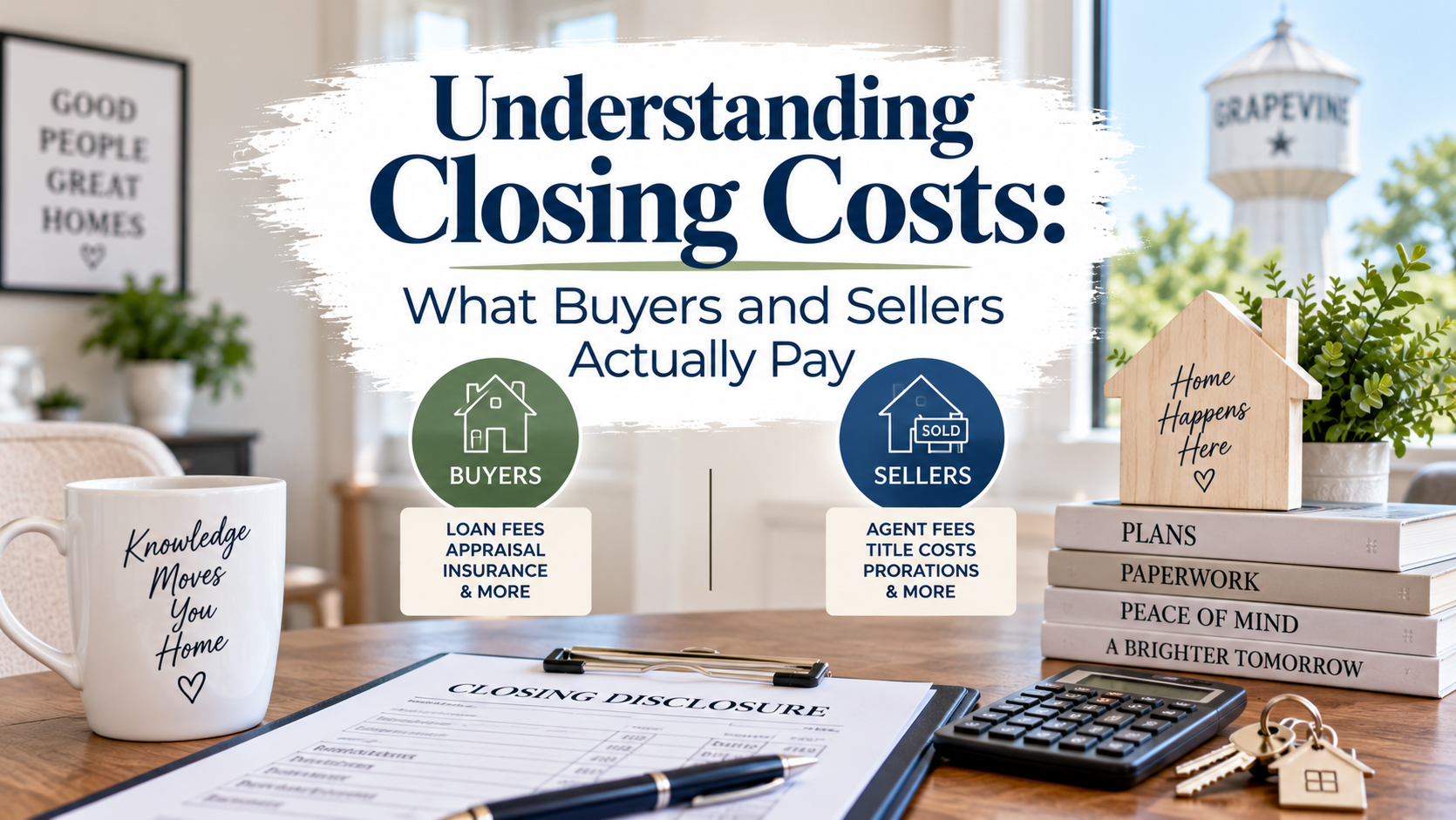
Buyers typically pay lender fees, title insurance, an appraisal fee, and prepaid items like the first portion of property taxes and homeowners insurance placed into escrow.
Each lender's specific fee structure varies, which is part of why comparing loan estimates from a few lenders during your pre-approval process is worth the effort. Prepaid items, while technically a closing cost, function more like an upfront deposit into your ongoing escrow account rather than a true expense, since that money goes toward your future tax and insurance payments.
It's worth asking your lender to walk through each line item on your Loan Estimate individually rather than just looking at the total. Some fees are fixed by the lender, some vary by service provider, and understanding which is which helps you know where, if anywhere, there's room to shop around.
- Lender fees: origination fees, underwriting fees, and other costs specific to your loan.
- Title insurance: protects against future ownership disputes and is generally required by lenders.
- Appraisal fee: pays for the independent valuation your lender requires before approving the loan.
- Prepaid items: initial escrow deposits for property taxes and homeowners insurance.
What Closing Costs Do Sellers Typically Pay?
Sellers typically pay title-related fees, a prorated share of property taxes for the portion of the year they owned the home, and any repair credits or concessions negotiated with the buyer.
The specific breakdown varies by contract terms and what's negotiated during the transaction. Sellers should also budget for any pre-listing repairs or staging costs separately, since these happen before closing and aren't part of the closing costs themselves.
Prorated property taxes catch some sellers off guard specifically because the calculation depends on exactly when during the year closing happens. Asking your agent or title company for an estimate of this figure once you have a target closing date helps you understand your net proceeds with much more accuracy.
My guide on how to price a home to sell covers the pricing side of a sale, which is a separate conversation from closing costs but affects your overall net proceeds just as directly.
How Are Closing Costs Different From a Down Payment?
A down payment is your equity contribution toward the home's purchase price, while closing costs are separate fees for the services and processes involved in completing the transaction.
| Category | What it covers |
|---|---|
| Down payment | Your equity contribution toward the home's purchase price |
| Closing costs | Fees for lender services, title work, appraisal, and prepaid escrow items |
| Prepaid items | Initial deposits into escrow for future property taxes and insurance |
Buyers should budget for both amounts independently rather than assuming closing costs are included in the down payment figure. Try the mortgage calculator to get a sense of your overall numbers before you talk to a lender about specific closing cost estimates.
A common mistake is setting aside exactly the down payment amount and assuming that covers everything needed to close. Budgeting a separate cushion for closing costs, on top of your down payment, avoids a stressful scramble in the final days before you're scheduled to sign.
Are Any Closing Costs Negotiable?
Some closing costs are negotiable between buyer and seller, particularly around who pays for specific items like a home warranty or certain repair credits, depending on current market conditions.
In a market with more buyer negotiating room, buyers sometimes request the seller cover a larger share of specific closing costs. In a stronger seller's market, this negotiating room narrows. Understanding current local conditions helps set realistic expectations for what's actually negotiable in your specific transaction.
This is another area where working with someone who has a current, accurate read on local market conditions makes a real difference. What was negotiable six months ago may not be negotiable today, and going into a negotiation with outdated assumptions about what's reasonable to ask for can work against you on either side of the transaction.
When Should You Get a Closing Cost Estimate?
Get an estimate early in the process, ideally during pre-approval for buyers or during your initial listing consultation for sellers, rather than waiting until right before closing.
- Buyers: ask your lender for a Loan Estimate early, which outlines projected closing costs in detail.
- Sellers: ask your agent for a net proceeds estimate that accounts for typical closing costs and prorations.
- Both: revisit the estimate as your transaction progresses, since some figures firm up closer to closing.
If you're getting ready to buy or sell in Grapevine and want a clear picture of your specific closing costs, I would like to walk through the numbers with you. Let's talk before you're staring at a settlement statement for the first time.
Frequently Asked Questions
How much are closing costs typically for buyers?
Closing costs vary based on the loan amount, lender, and specific transaction details. Getting a Loan Estimate from your lender early in the process gives you an accurate, personalized figure rather than relying on a general rule of thumb.
Do sellers pay closing costs too?
Yes. Sellers typically pay title-related fees, a prorated share of property taxes, and any negotiated repair credits or concessions, separate from the buyer's closing costs.
Are closing costs the same as the down payment?
No. The down payment is your equity contribution toward the purchase price. Closing costs are separate fees for lender services, title work, and prepaid escrow items, and both should be budgeted independently.
Can closing costs be negotiated?
Some can be, depending on current market conditions and what both parties agree to in the contract. Buyer negotiating room for closing cost concessions tends to widen in a slower market and narrow in a stronger seller's market.
When should I get an estimate of my closing costs?
As early as possible. Buyers should request a Loan Estimate during pre-approval, and sellers should ask their agent for a net proceeds estimate during their initial listing consultation.
About Amy
I have walked Grapevine buyers and sellers through the closing process for more than two decades and am consistently recognized among Grapevine's top 10 listing agents. I am backed by Century 21 Mike Bowman, the number one Century 21 office in Texas with the highest market share in Grapevine.
Amy Beyer, Realtor | Grapevine, TX | AmyBeyerRealtor.com | Powered by Century 21 Mike Bowman | TREC #0500623 since 2002
This article offers general guidance and is not financial, legal, or tax advice; consult a qualified professional for your specific transaction. Equal Housing Opportunity.
More on the Blog
Next up: what Lake Grapevine access really means for buyers and sellers considering a home near the water. If you're getting ready to buy or sell, let's talk about your specific numbers first.
Check out this article next