

Buyer Resource
New Construction in Fort Worth: How Buying a Home That Doesn't Exist Yet Actually Works
Buying a brand-new home means signing a contract for a house that is currently a patch of dirt. Here is how the whole thing actually works, start to finish.
Amy Beyer Realtor® | Fort Worth's Local Expert For Relocation & New Construction
Amy Beyer Realtor · Grapevine, TX · Powered by Real Broker, LLC
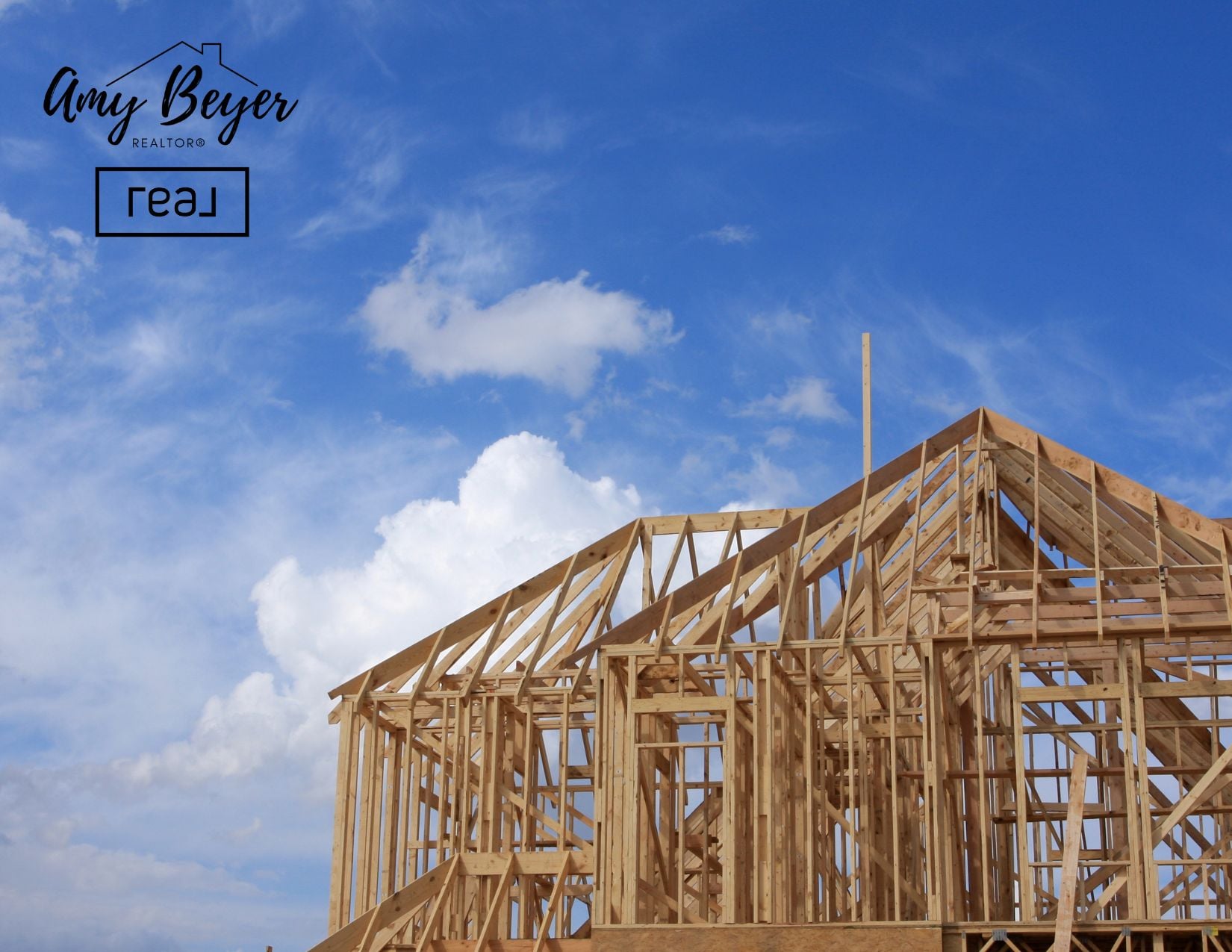
Dirt → Frame → Finish Out → Keys
If you have ever driven the Alliance corridor in north Fort Worth, you have watched entire neighborhoods appear the way mushrooms show up after rain. New construction in Fort Worth is everywhere right now, and it is one of my three lead pillars for a reason: buyers love it, and buyers also walk into it with more confidence than information. That combination keeps me busy.
Here is the thing about buying a home that does not exist yet. You are not really buying a house. You are buying a promise, a floor plan, a lot number, and a builder's reputation, all wrapped in a contract the builder wrote. That is not a scary thing. It is just a different thing, and different things deserve a checklist.
I have walked clients through new builds from the first model home visit to the blue tape walkthrough, and the buyers who come out happiest are the ones who understood the process before they fell in love with a kitchen island. So let's get you to that group.
If You Do Nothing Else, Do These Things
- Bring your own agent to the very first model home visit and register them at the door
- Read the builder's contract before signing anything, because it is not the standard Texas resale contract
- Get the incentive details in writing, including exactly what strings are attached
- Budget for independent inspections at key construction phases, even on a brand-new home
- Ask the builder for their current build timeline in writing, not the one from the brochure
Who Actually Represents You at the Model Home?
Read the name tag
The friendly person in the model home works for the builder. Full stop. They may be delightful, they may remember your coffee order, and their job is still to sell that builder's homes on that builder's terms.
That is not a criticism. It is just the org chart. The builder's sales rep is excellent at their job, which is why you want someone on the org chart whose job is you.
#1: Register your agent on the very first visit.
Most builders require your agent to accompany you or be registered on your first visit for the builder to compensate them. Show up alone, sign in alone, and you may have just volunteered to go through the biggest purchase of your life without representation. In most cases the builder pays your agent's fee, so bringing me costs you nothing except the pleasure of my company in the car.
Your agent's job on a new build is different than on a resale: reviewing the builder contract, tracking construction milestones, negotiating the incentive package, coordinating inspections, and being the person who says "let's get that in writing" so you don't have to be the bad guy. I am very comfortable being the bad guy. I have had practice.
How Is the Builder's Contract Different From a Resale Contract?
Their paper, their rules
When you buy a resale home in Texas, you use a promulgated contract form that has been refined over decades to balance buyer and seller interests. When you buy new construction, you use the builder's contract, which was written by the builder's attorneys to protect, you guessed it, the builder.
#2: Read the contract like it matters, because it does.
A few places where builder contracts commonly differ from what resale buyers expect:
- Earnest money and deposits. Builders often require larger deposits, plus separate non-refundable design center deposits once you start picking finishes.
- Termination rights. Your outs are usually narrower than in a resale contract. Know exactly when your money stops being refundable.
- Completion dates. Most builder contracts give the builder flexibility on the delivery date. Plan your lease-end and moving logistics with cushion.
- Price protections. Ask how change orders, upgrades, and any allowances are handled if costs shift during the build.
None of this is a reason to avoid new construction. It is a reason to have every page read by someone who has seen a few hundred of these before you initial anything.
What Does the Timeline Look Like From Dirt to Closing?
The long middle
Every builder moves at their own pace, and weather, permits, and material availability all get a vote. Ask your builder for their current average in writing. That said, here is the general shape of the journey so nothing surprises you:
| Phase | What's Happening | Your Job |
|---|---|---|
| Contract and selections | You sign, put down deposits, and make design center choices | Stick to your budget; upgrades add up faster than queso at happy hour |
| Permits and foundation | Lot prep, plumbing rough-in, slab pour | Consider a pre-pour inspection; verify your lot and plan match the contract |
| Framing | The skeleton goes up and it suddenly looks like a house | Walk it with your agent; frame-stage inspection happens here |
| Mechanical and pre-drywall | Electrical, plumbing, and HVAC installed inside open walls | Pre-drywall inspection, the most valuable one you will ever buy |
| Drywall to finish-out | Walls close, cabinets, counters, flooring, paint | Resist daily drive-bys; the mess is normal |
| Blue tape walkthrough | You mark every flaw with blue painter's tape before closing | Bring your inspector's final report and be politely picky |
| Closing and keys | Final walkthrough, funding, and move-in | Confirm every blue tape item was completed or documented |
The long middle is where buyers get antsy. My advice: schedule your milestone visits, trust the inspection checkpoints, and spend the waiting months planning the move instead of refreshing the builder portal at midnight.
What About Builder Incentives and the Preferred Lender?
Free money, with footnotes
Builders love incentives: closing cost contributions, rate buydowns, design center credits, sometimes all three stacked together. These can be genuinely valuable. They can also come with a footnote the size of Texas: most incentives require you to use the builder's preferred lender and sometimes their affiliated title company.
#3: Compare the whole deal, not just the incentive headline.
The preferred lender's offer with the incentive might beat your outside lender's offer without it. Or it might not, once you compare rate, fees, and total cost side by side. The only way to know is to get a full loan estimate from both and put the numbers next to each other. I help my buyers build that comparison every time, because "we'll give you thousands in incentives" and "this is your best financial option" are two different sentences.
Incentives change constantly, community by community and month by month, so I will not quote numbers here. Ask what is being offered the week you are shopping, and get it in the contract, not in a conversation. I go deeper on this in an upcoming post on decoding builder incentives, so stay tuned.
Do You Really Need Inspections on a Brand-New Home?
Yes. Next question.
Yes. A new home is built by humans, in weather, on a schedule. City inspections check code minimums; your independent inspector checks workmanship, and those are not the same bar.
The gold standard for new construction is phased inspections: foundation pre-pour, frame stage, pre-drywall, and a final inspection before your blue tape walkthrough. Pre-drywall is the one I push hardest, because it is the only time in the life of that house anyone can see the wiring, plumbing, and ductwork without opening a wall. After drywall goes up, problems do not disappear. They just become surprises with worse timing.
Builders are used to this. Good ones welcome it. If a builder resists independent inspections, that tells you something worth knowing before closing rather than after.
Where Is New Construction Happening Around Fort Worth?
Follow the rooftops
North Fort Worth has been one of the most active new construction areas in DFW, especially along the Alliance corridor and in the 76244 zip code, home to large master-planned communities like the Villages of Woodland Springs. Communities in this area are served by districts including Keller ISD and Northwest ISD, depending on the exact location, so verify the boundary for any specific lot.
What draws buyers to these communities are the features: newer housing stock, community amenities like pools and trail systems, and proximity to the employment centers around Alliance and to DFW Airport. I have sold and listed homes in these neighborhoods, including recent sales in the Villages of Woodland Springs and Coventry Hills, so when I say I know which builders finish their punch lists, that is field research, not a brochure.
If you are moving to the area from out of state, pair this post with my guide on relocating to DFW. New construction and relocation go together like brisket and a long nap.
Frequently Asked Questions
Quick answers
Do I have to pay my own agent when buying new construction in Fort Worth?
In most cases the builder compensates your agent, so representation typically costs you nothing out of pocket. Confirm the details up front, and make sure your agent is registered with the builder on your very first visit so you preserve that arrangement.
Can you negotiate with a home builder?
Yes, but usually not on base price the way you would on a resale. Builders more often flex on incentives, closing costs, design center credits, and lot premiums. An agent who works new construction regularly knows where each builder has room to move.
How long does it take to build a new home in Fort Worth?
It varies by builder, plan, and season, and whether you buy a to-be-built home or an inventory home that is already underway. Ask the builder for their current written timeline rather than relying on averages, and build cushion into your moving plans.
Should I get an inspection on a brand-new house?
Absolutely. Independent phased inspections, especially at pre-drywall, catch workmanship issues while they are still easy to fix. City code inspections are not a substitute for your own inspector.
Is the model home what my house will actually look like?
The model shows the floor plan wearing its fanciest outfit. Most of what you see is upgraded finishes from the design center. Ask the sales rep what comes standard, and get your selections priced before you fall in love.
Up Next: Lake Grapevine Like a Local
Enough contracts and timelines. Next up, I am taking you to my favorite place in town: the coves, trails, and sunset spots at Lake Grapevine that make living here feel like a permanent vacation.
Lake Grapevine Like a Local: Coves, Trails, and the Best Sunset Spots →
Amy Beyer Realtor
Grapevine, TX · 972 965 0657 · [email protected]
Powered by Real Broker, LLC · TREC #0500623 since 2002
By Amy Beyer, Realtor | Grapevine, TX | AmyBeyerRealtor.com | Powered by Real Broker, LLC | TREC #0500623 since 2002
Check out this article next