
Rightsizing Resource
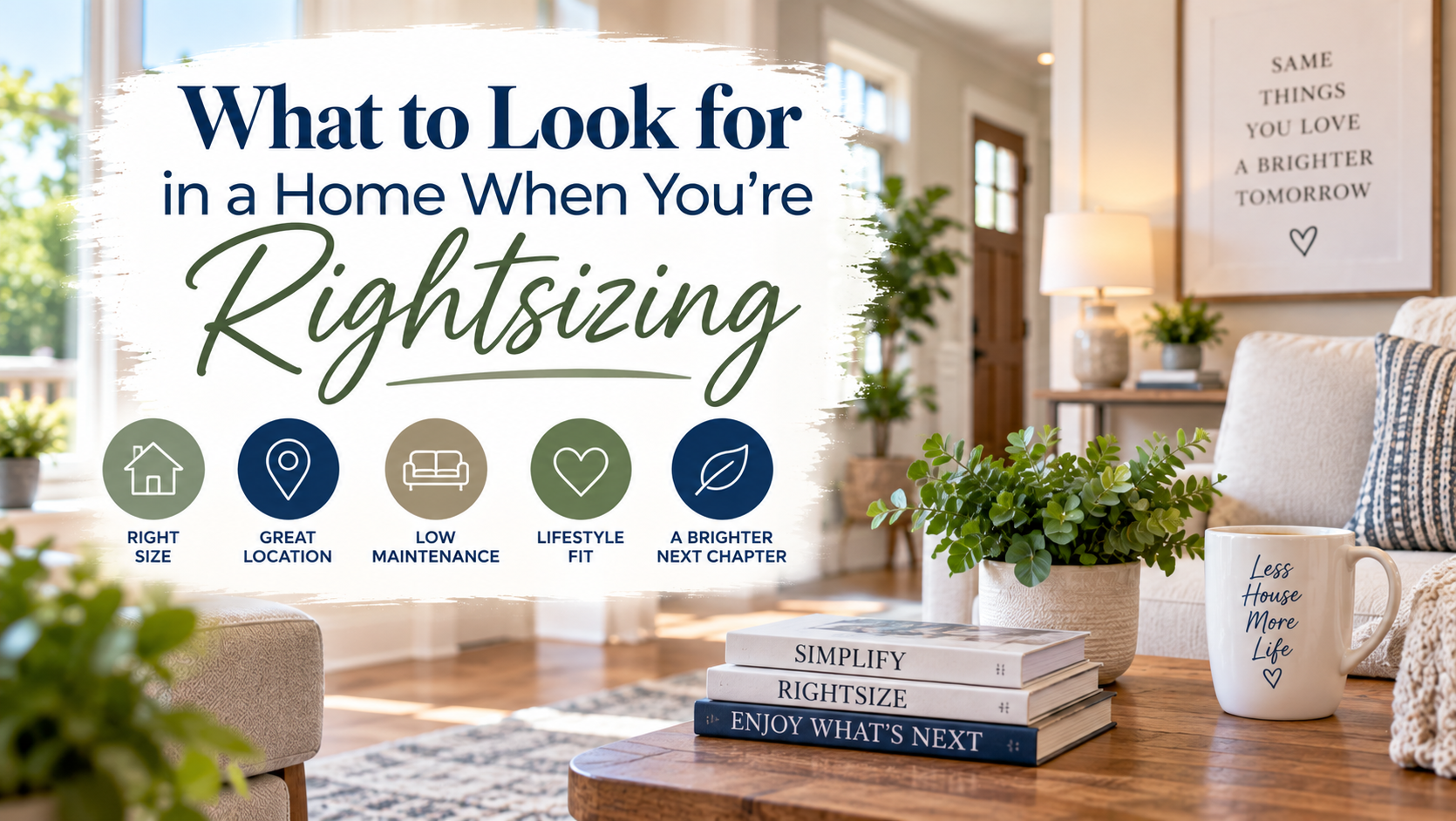
What to Look for in a Home When You're Rightsizing
Rightsizing · Grapevine, TX
Rightsizing isn't just about finding a smaller home. It's about finding a home that actually fits how you live now, which is a different question entirely. Buyers who approach this search with the same checklist they used decades ago often end up with a smaller version of a home that doesn't quite work, rather than a home genuinely designed for this stage of their life.
I have guided Grapevine homeowners through this exact search for more than two decades, and the ones who end up happiest are the ones who go in with a clear, specific list of what actually matters to them now. This guide covers exactly what to look for.
It helps to separate this search from your last one entirely. The priorities that shaped your current home, whether that was proximity to a former job, space for a specific stage of life, or simply what was available at the time, may not have much bearing on what actually serves you well today.
Key Takeaways
- Layout and flow matter more than total square footage; an efficient smaller home often outperforms an inefficient larger one.
- Single-story or no-step layouts directly reduce daily physical demands in a way square footage reduction alone does not.
- Storage that's actually usable, not just present, matters more than the number of closets a listing advertises.
- Lot size and exterior maintenance requirements affect your day-to-day workload as much as the home's interior.
- Proximity to the things you actually use regularly matters more now than proximity to things you used to need.
"A rightsized home isn't a smaller version of your old house. It's a home built around how you actually live today, not ten years ago."
Amy Beyer, REALTOR®, Century 21 Mike Bowman, Grapevine's Go-To Expert for Listing Services, Relocation and New Construction Homes
Why Does Layout Matter More Than Square Footage?
An efficient, well-designed smaller home often functions better day to day than a larger home with wasted or awkward space, which is why layout deserves more attention than the total square footage number.
In my years helping buyers through this exact search, I've walked through plenty of larger homes that feel cramped in daily use because of poor flow, and plenty of smaller homes that feel spacious because every room serves a real purpose. When touring homes, pay attention to how you'd actually move through daily routines, not just how the square footage compares to your current home.
A useful exercise is to mentally walk through a typical day in each home you tour. Where would you make coffee, where would you read, where would guests sit if they visited? Homes that support that actual routine smoothly tend to feel right regardless of their exact size, while homes that require awkward workarounds rarely feel comfortable no matter how many square feet they offer.
Why Does a Single-Story Layout Matter So Much?
A single-story or no-step layout directly reduces the physical demands of daily life in a way that simply having less square footage does not.
Stairs are one of the most overlooked factors in a rightsizing search. A smaller two-story home can still require the same daily stair climbing as a larger one, while a single-story home removes that factor entirely regardless of its size. If reducing physical demands is part of your motivation for this move, prioritize layout over pure square footage reduction.
| What you notice | What it means |
|---|---|
| A home has a single-story layout but feels cramped | Look closer at the floor plan's flow; single-story alone doesn't guarantee good design |
| Closets and storage look small on paper | Tour in person; usable storage often differs from what square footage suggests |
| The lot is smaller but still has significant landscaping | Ask about maintenance requirements specifically, not just lot size |
Why Does Storage Quality Matter More Than Storage Quantity?
A home with fewer but genuinely usable closets and storage areas often serves you better than a home advertising more storage that's awkwardly shaped or hard to access.
When touring homes, physically open closets and storage areas rather than relying on a listing's stated count. A deep, well-organized closet is more useful than two shallow ones, and a home's actual storage function matters more than the number listed on paper. My guide on planning a downsizing move covers how to think through what you'll actually need to store before you even start touring.
Pay attention too to how storage is distributed throughout a home, not just its total volume. A single large closet near the entry can be far more useful day to day than the same square footage split awkwardly across several small, hard-to-reach spaces scattered throughout the house.
How Should You Think About the Lot and Exterior?
Consider exterior maintenance requirements, not just lot size, since a smaller lot with extensive landscaping can require just as much upkeep as a larger, simpler one.
- Landscaping complexity: ask about what's actually involved in maintaining the yard, not just its size.
- Exterior materials: brick, stone, and fiber cement generally require less upkeep than wood siding.
- HOA-managed maintenance: some communities handle exterior upkeep as part of dues, shifting that workload off your plate.
- Lock-and-leave convenience: consider whether the home lets you travel without ongoing maintenance concerns.
How Should Location Priorities Shift When You're Rightsizing?
Prioritize proximity to what you actually use regularly now, rather than defaulting to the same location priorities that mattered at an earlier stage of life.
This often means weighing convenience to daily errands, healthcare, and social connections more heavily than factors that mattered when your priorities looked different. I always encourage buyers going through this search to write out an honest list of what a typical week actually looks like now, then map potential neighborhoods against that real routine rather than an old assumption about where they should live.
This shift in priorities is often the part of a rightsizing search that surprises people most. A location that made perfect sense years ago can feel disconnected from daily life now, while an area that wasn't previously on the radar might actually fit far better once you're honest about how your week actually unfolds.
Learn more about the full home buying process to see how a rightsizing search fits into a typical buyer's timeline.
A Practical Checklist for Your Rightsizing Search
- Tour with your actual routine in mind: not the routine you used to have.
- Prioritize single-story or no-step layouts: if reducing physical demands is a real goal.
- Physically check storage: don't rely on a listing's stated closet count.
- Ask about exterior maintenance: for any home you're seriously considering.
- Map the location against your real week: not an outdated sense of where you should be.
If you're starting to think seriously about rightsizing in Grapevine, I would like to help you build a search around what actually matters to you now. Let's talk about what you're looking for.
Frequently Asked Questions
Is a smaller home always the right choice when rightsizing?
Not necessarily. Rightsizing is about finding a home that fits your current needs, which sometimes means less space, but can also mean a different layout, lower maintenance, or a more convenient location.
Why does a single-story layout matter so much?
It removes stairs from daily routines entirely, which reduces physical demands in a way that simply having less square footage does not.
How do I know if a home has enough storage?
Physically open closets and storage areas during your tour rather than relying on a listing's stated count. Usable storage often differs meaningfully from what square footage numbers suggest.
Does a smaller lot always mean less maintenance?
Not always. A smaller lot with extensive landscaping can require just as much upkeep as a larger, simpler one. Ask specifically about maintenance requirements rather than assuming based on lot size alone.
How should I think about location differently when rightsizing?
Focus on proximity to what you actually use regularly now, rather than defaulting to old location priorities. Mapping potential neighborhoods against your real current routine gives a clearer picture than general assumptions.
About Amy
As Grapevine's local expert for rightsizing, I have spent more than two decades helping homeowners find homes that genuinely fit their current stage of life. I am backed by Century 21 Mike Bowman, the number one Century 21 office in Texas with the highest market share in Grapevine.
Amy Beyer, Realtor | Grapevine, TX | AmyBeyerRealtor.com | Powered by Century 21 Mike Bowman | TREC #0500623 since 2002
This article offers general guidance and is not a substitute for a personalized home search consultation. Equal Housing Opportunity.
More on the Blog
Next up: understanding closing costs, what buyers and sellers actually pay in a typical Texas transaction. If rightsizing is on your mind now, let's talk about what you're looking for.
Check out this article next