

Rightsizing Resource
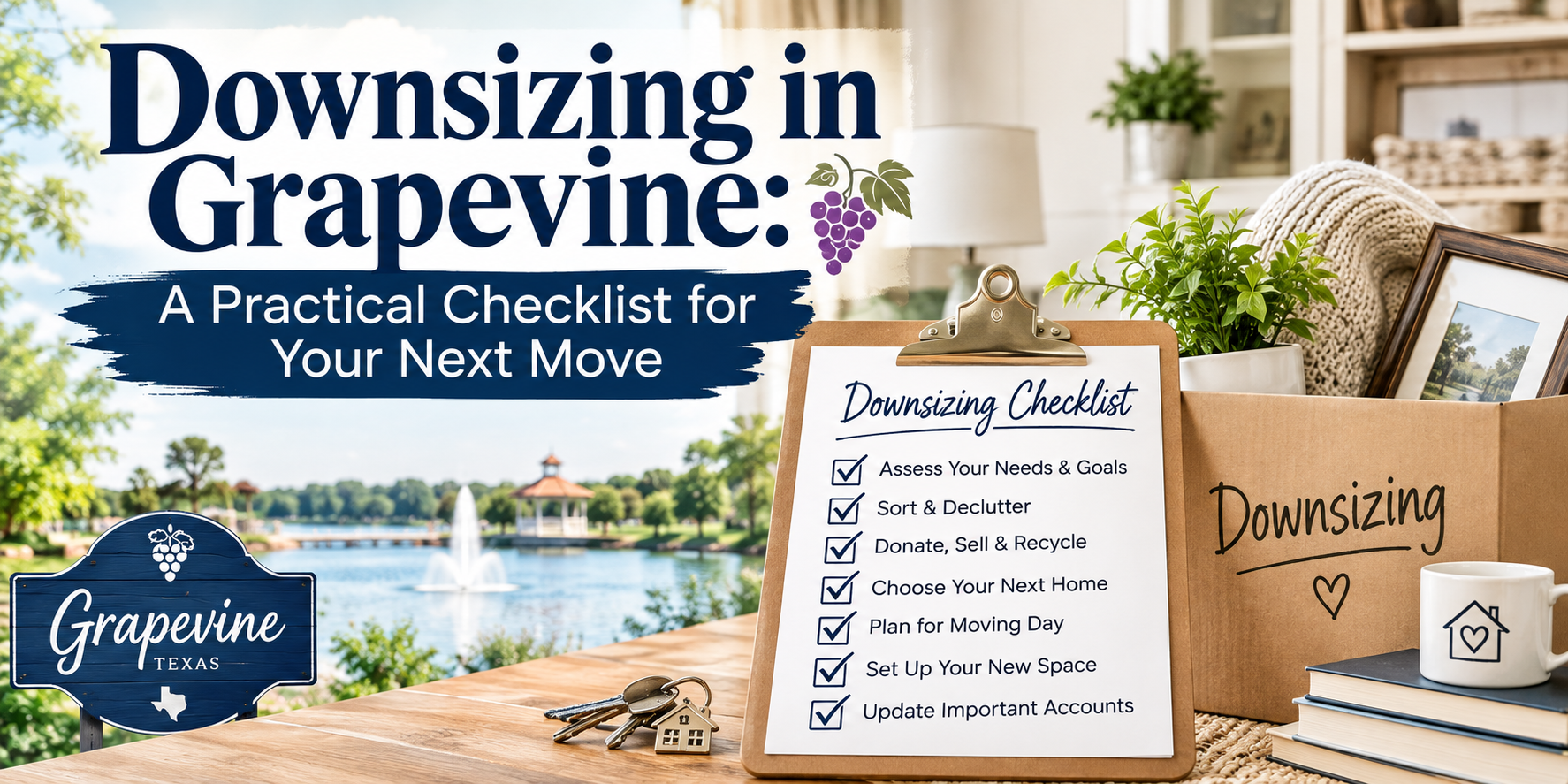
Downsizing in Grapevine: A Practical Checklist for Your Next Move
Rightsizing · Grapevine, TX
Downsizing sounds simple until you actually start planning it. The real questions are rarely about square footage alone. They are about what you use every day, what you have not touched in years, and what kind of home would actually lower your workload instead of just shrinking your address. If you are thinking about downsizing in Grapevine, this checklist walks through the decisions that matter most, in the order they usually come up.
I have guided homeowners through this exact move in Grapevine for more than two decades, and the ones who plan it well start with the same question: what does my current home cost me in time and money that a smaller, more efficient home would not? That question drives everything else on this list.
Key Takeaways
- Start by identifying which rooms you actually use weekly, not which rooms you could theoretically use.
- Single-story layouts and low-maintenance lots reduce physical upkeep more than square footage reduction alone.
- Your current home's equity is the most important number in this move; get a real, current estimate before you shop.
- Storage needs shrink less than people expect; plan for where belongings will actually go before you list.
- A downsizing move and a standard move have different timelines; give yourself more runway for sorting and deciding than you think you need.
"The homeowners who downsize successfully aren't the ones who cut every square foot possible. They're the ones who cut the square footage they weren't using anyway."
Amy Beyer, REALTOR®, Century 21 Mike Bowman, Grapevine's Go-To Expert for Listing Services, Relocation and New Construction
What Should You Ask Yourself Before You Start Looking?
Start by identifying which rooms and features in your current home you actually use on a regular basis, not which ones you could theoretically use someday.
This is where most downsizing plans go wrong. Homeowners assume they need to replace every function of their current home in the new one: the formal dining room, the extra bedroom, the full basement. In my years guiding Grapevine homeowners through this move, the ones who get the most out of downsizing are the ones who audit their actual habits first. Walk through your home room by room and note the last time you used each space for its intended purpose. That list becomes your real requirements, not a smaller version of your old wish list.
It also helps to separate wants from needs early. A guest room you use twice a year is a want worth weighing against the maintenance and cost of keeping it. A dedicated workspace you use daily is closer to a need. Writing both lists down before you start touring homes keeps your search focused and keeps you from talking yourself into more space than you will actually use going forward.
What Home Features Actually Reduce Upkeep?
Single-story layouts, smaller lots, and lower-maintenance exteriors reduce day-to-day workload more directly than total square footage alone.
A smaller two-story home can still mean stairs, more roof and gutter area per usable square foot, and a yard that takes just as much mowing as your current one. If reducing physical upkeep is the actual goal, look specifically at single-story or no-step layouts, smaller lot sizes, and exterior materials that need less regular maintenance like brick or fiber cement siding. These features matter more to your day-to-day workload than the total number of bedrooms.
- Single-story or no-step layout: removes stairs from daily routines entirely.
- Smaller lot size: less mowing, edging, and seasonal yard work overall.
- Low-maintenance exterior: brick, stone, or fiber cement need less regular upkeep than wood siding.
- Lock-and-leave convenience: a home you can leave for extended travel without ongoing maintenance worries.
- HOA-managed exteriors: some communities handle lawn care and exterior upkeep as part of dues, which shifts that workload off your plate.
How Do You Know What Your Current Home Is Actually Worth?
Get a real, current estimate of your home's value before you start shopping for your next one, since that number drives what is actually possible for your next move.
A lot of downsizing plans stall because the homeowner is working from an outdated sense of their home's value, either too conservative or too optimistic. Grapevine's market has moved enough in recent years that an estimate from even two or three years ago will not reflect current conditions accurately.
Get a current home value estimate before you start touring smaller homes, so you know your real numbers going in.
This step matters more than it seems like it should. Your equity determines your down payment, your monthly payment on the next home, and whether buying before you sell is even realistic for your situation. Homeowners who skip this step often end up shopping for homes that do not actually match what their equity supports, which wastes time and creates disappointment partway through the search.
How Should You Think About Storage and Belongings?
Plan for where your belongings will actually go before you list your current home, since storage needs shrink less than most people expect during a downsizing move.
Twenty years in a larger home means twenty years of accumulated belongings, and sorting through that takes real time. I always tell clients to start this process earlier than feels necessary, room by room, well before the home goes on the market. Waiting until closing week to sort through decades of belongings turns a manageable process into a stressful one.
| What you notice | What it means |
|---|---|
| You are only sorting through one or two rooms per weekend | You are pacing appropriately; give yourself several months before listing if possible |
| You keep putting off the garage or attic | These often take the longest; start there earlier rather than later |
| You are unsure what will fit in the new home's storage | Measure closets and storage areas at homes you tour, not just room dimensions |
What Does the Downsizing Timeline Actually Look Like?
Give yourself more time than a typical move requires, since sorting decades of belongings and finding the right smaller home both take longer than people initially plan for.
A standard home sale and purchase can move quickly once you are under contract. Downsizing adds a layer that has nothing to do with contracts and everything to do with decisions: what to keep, what to sell, what to pass along, and what to let go of entirely. Building in extra time for that part of the process, separate from the real estate timeline itself, makes the whole move less stressful.
- Three to six months out: begin sorting belongings room by room and get a current home value estimate.
- One to two months out: start touring homes with your specific must-have list in hand.
- Listing your current home: coordinate timing so you are not carrying two homes longer than necessary.
- Closing on your next home: confirm move logistics, including what belongings are going where, well before closing week.
If you are starting to think seriously about downsizing in Grapevine, I would like to help you plan this move from the very first step, not just the listing. Let's talk about what your timeline and options actually look like.
Frequently Asked Questions
What is the difference between downsizing and rightsizing?
Downsizing usually refers specifically to moving into less square footage. Rightsizing is a broader term for finding a home that actually fits your current needs, which sometimes means less space, but can also mean a different layout, a lower-maintenance lot, or a more convenient location.
Do I need to sell my current home before I buy the next one?
Not necessarily. There are financing and timing strategies that let you buy before you sell in some situations. The right approach depends on your equity, your financing, and your comfort level, so it is worth a specific conversation before you assume either path is required.
How do I know if a single-story home is worth prioritizing?
If reducing physical upkeep and daily convenience is a priority, single-story or no-step layouts directly address that. If space and layout matter more than stairs specifically, a well-designed smaller two-story home might still work for your situation.
What should I do with belongings I am not ready to part with?
Start sorting early and separate items into clear categories: keep, sell, donate, and undecided. Giving yourself a real timeline for the undecided pile, rather than letting it linger indefinitely, keeps the process moving.
How far in advance should I start planning a downsizing move?
Three to six months is a reasonable starting point for most homeowners, giving you time to sort belongings, get a current home value estimate, and tour homes without feeling rushed into a decision.
About Amy
As Grapevine's local expert for relocation and rightsizing, I have spent more than two decades helping homeowners plan moves into homes that actually fit their current life. I am proud to be featured in Real Producers as one of the Top 500 Realtor's in Ft. Worth and backed by Century 21 Mike Bowman, the number one Century 21 office in Texas with the highest market share in Grapevine.
Amy Beyer, Realtor | Grapevine, TX | AmyBeyerRealtor.com | Powered by Century 21 Mike Bowman | TREC #0500623 since 2002
This article offers general guidance and is not financial, legal, or moving-logistics advice; consult a qualified professional for your specific situation. Equal Housing Opportunity.
More on the Blog
Next up: a side-by-side look at Grapevine and Fort Worth, comparing commutes, lifestyle, and home types. If downsizing is already on your mind, let's talk about your timeline now.
Check out this article next